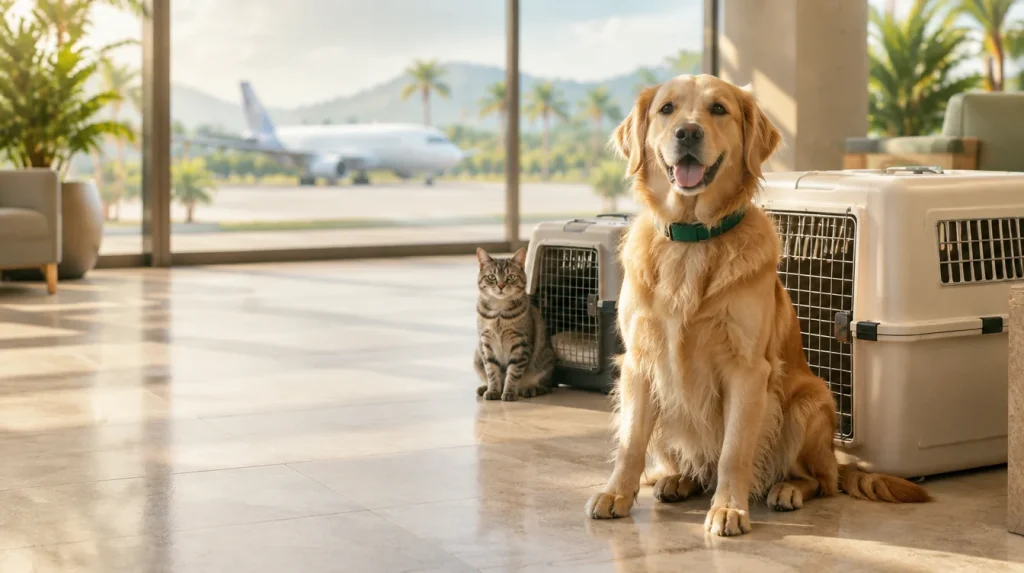
The cover image is an illustration of an animal’s journey, not documentation of a PTI customer.
Before purchasing a ticket or a pet carrier, first ensure that your pet is eligible for the route. Preparations for transporting dogs and cats begin with the city of origin, the destination, the animal’s health condition, and the carrier’s regulations. The fact that the owner’s ticket has been issued does not necessarily mean that the pet can travel on the same flight.
Please prepare a note containing the breed, age, most recent weight, estimated departure date and vaccination history. This information will serve as a starting point for discussing documentation, travel options and crate sizes. Even tentative dates can be used to begin the consultation.
Check pet acceptance policies before finalising your schedule
For air travel, enquire whether your dog or cat is accepted on the chosen route, including during transit. Specify the breed, age and weight of the animal, as well as the weight and dimensions of its carrier. The method of transport must also be clearly stated: in the cabin, as checked baggage or as manifested cargo, depending on the services available.
For example, Singapore Airlines has restrictions on breeds, routes and aircraft types. The terms and conditions of one airline do not automatically apply to another. Please seek confirmation for your journey before paying for your ticket or purchasing a pet carrier.
Separate domestic and international documents
For inter-regional shipments within Indonesia, the Indonesian Quarantine Agency outlines the reporting and quarantine inspection requirements. Its guidelines specify the need for a veterinary certificate from the local authority in the place of origin. For animals capable of transmitting rabies, such as dogs and cats, vaccination records and rabies antibody titre test results are also included in the requirements. Confirm the applicability of these requirements for your route with the quarantine units at both the point of origin and destination.
For international travel, check the official requirements of the destination and transit countries. Documents may include microchip identification, proof of vaccination, test results, health certificates and import permits. The USDA APHIS explains that health requirements vary from country to country; the US procedures on that page do not constitute guidance on export procedures from Indonesia.
Compile a list of documents, including their issuers and expiry dates. Verify the owner’s name, the pet’s identification details and the microchip number, if applicable. Save legible scans, then enquire which original documents must accompany the pet. Do not set a departure date based solely on an estimate of how long it takes to process a single document.
Discuss your pet’s condition with a vet
Bring your pet’s vaccination records and medical history to the check-up. Let the vet know if your pet is currently on medication, is easily frightened, has a history of breathing difficulties, or has recently recovered from an illness. The vet will be able to assess your pet’s fitness for travel and make the necessary arrangements based on its condition.
The American Veterinary Medical Association (AVMA) advises that flat-faced animals, including Pugs and Persian cats, are at greater risk of heatstroke or respiratory distress whilst travelling. Discuss transport options with your vet and the carrier before making a booking.
Do not give sedatives without veterinary guidance. The Australian Veterinary Association (AVA) states that dogs and cats should not be sedated for air transport. Discuss regular medication or anxiety management with your vet and airline.
Measure your pet before buying a travel crate
Body weight alone is not enough to choose a travel crate. Measure the animal’s body length, the width at its widest point, and its height when standing naturally. Send these measurements along with a photo of the crate you are considering so that its suitability can be checked before purchase.
According to IATA’s carrier guidelines, animals require space to stand and sit upright, turn around normally, and lie down in a natural position. Also check the construction, ventilation, fastenings, base and water container in accordance with the airline’s regulations. The words ‘pet carrier’ on a product do not guarantee that the carrier will be accepted for your route.
Get your pet used to the carrier whilst still at home
Get your pet used to the crate before departure. AVA recommends crate training to help reduce travel stress. Ask the carrier which items are permitted inside the crate.
For dogs, crate training can form part of their daily routine. For cats, give them the chance to get used to the carrier at home before using it for travel. If your pet continues to show signs of panic, discuss training methods and travel plans with your vet.
Arrange for handover right through to the destination
Make a note of who is handing over and receiving the animal, contact numbers, the handover location, and the documents each party is carrying. Ask for details of the inspection schedule and the deadline for handing over the animal. The collection point at the destination must be confirmed; do not assume it is always the same as the passenger baggage area.
Before departure, double-check the following points with the carrier:
- The latest routes and timetables have been confirmed, including any transit stops where applicable.
- The required documents are available and the animal’s identity is consistent.
- The agreed-upon crate is ready for use, with locks and fittings that have been checked.
- Staff or recipients have your contact details and information regarding your pet’s needs.
- Plans for food, water and routine medication have been discussed with the vet for the duration of the journey.
If your pet’s health changes before departure, contact your vet and inform the carrier so that the travel plans can be reviewed. Upon arrival, the recipient must follow the collection and quarantine reporting procedures applicable at the destination.
Start with the details you already have
You can contact Pet Transport Indonesia even if your travel dates or the size of the carrier are not yet confirmed. Please have the following information ready: the city of departure and destination, the type and breed of the animal, its age, weight, estimated travel dates, and any available vaccination or microchip records.
View PTI’s travel preparation checklist, then complete the dog and cat shipping enquiry form to discuss routes and the assistance required. The form generates a summary of your request; you can review the contents before choosing to send it via WhatsApp or email.
References checked on 26 October 2026. Final requirements must be reconfirmed with the authorities of origin, destination, transit and the carrier for your travel itinerary.